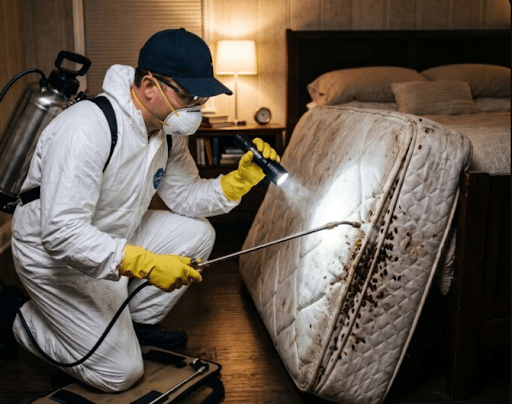
Can Bed Bugs Survive Heat Treatment? What Science Says
If you’ve heard that professional heat treatment can wipe out bed bugs, you may still have one nagging question:
Can bed bugs actually survive the heat?
It’s a fair question. Bed bugs are remarkably good at hiding, and homeowners often worry that a few insects or eggs tucked inside a mattress, wall void, sofa, or crack might somehow survive treatment and start the infestation all over again.
The good news is that properly performed heat treatment can kill bed bugs at every life stage, including eggs. But there is an important catch: simply making a room hot is not enough. The temperature must reach lethal levels in the places where bed bugs are hiding and remain there for enough time.
Research backs this up. One study found that adult bed bugs had a 99% lethal temperature of about 48.3°C (118.9°F), while eggs required about 54.8°C (130.6°F) under the study conditions.
So, can bed bugs survive heat treatment?
They can survive inadequate heat treatment. They should not survive a properly monitored treatment that reaches the required temperatures throughout the treatment area.
Why Heat Works Against Bed Bugs
Bed bugs are cold-blooded insects. Their bodies depend heavily on the surrounding environment.
As temperatures rise beyond their tolerance range, their biological systems begin to fail.
The U.S. Environmental Protection Agency notes that bed bugs die when their body temperature reaches approximately 45°C (113°F). However, the surrounding room or treatment container needs to become hotter than that because the heat must actually reach the insects wherever they are hiding.
That distinction matters.
A thermostat set to a high temperature is not a professional bed bug treatment. Neither is putting a space heater in a bedroom and hoping the bugs eventually cook.
Professional treatment involves specialized equipment, controlled heat distribution, and temperature monitoring.
Heat Has to Reach the Hiding Places
Bed bugs don’t politely sit in the middle of the room waiting to be eliminated.
They hide in:
- Mattress seams
- Box springs
- Bed frames
- Upholstered furniture
- Cracks and crevices
- Baseboards
- Wall voids
- Closets
- Behind furniture
- Other protected areas
Research has shown that heat penetration is critical because protected locations can take longer to reach lethal temperatures. One study found that bed bugs under blankets required longer exposure than insects directly exposed to heat.
That’s why professional heat treatment is about temperature + time + coverage, not simply turning up the heat.
Can Bed Bug Eggs Survive Heat Treatment?
This is one of the biggest concerns homeowners have.
Bed bug eggs can be particularly challenging because they are protected by their outer structure and may respond differently to heat than adults.
Research demonstrates that eggs can tolerate lower temperatures for longer periods than adult bed bugs. In one study, eggs survived seven hours at 45°C but required much less time to reach high mortality at higher temperatures.
That is exactly why professional treatment must be carefully controlled.
The objective isn’t to make the room uncomfortable for bed bugs.
The objective is to expose the entire treatment area to temperatures and exposure times capable of killing all life stages.
What Happens to Hidden Eggs?
When heat reaches the necessary temperature for the required exposure time, eggs cannot simply “wait it out” indefinitely.
A properly performed treatment can reach areas that are difficult to treat with surface sprays, including furniture interiors and other hidden spaces.
But if part of a room never reaches the required temperature, bed bugs or eggs in that untreated pocket may survive.
That’s why temperature monitoring and proper heat circulation matter so much.
Why Some Bed Bugs Can Survive a Poor Heat Treatment
This is where the science gets interesting.
Bed bugs don’t necessarily die the instant a thermometer reaches a particular number.
Time matters.
For example, laboratory research found that adult bed bugs exposed to 45°C required substantially longer exposure to reach very high mortality, while higher temperatures reduced the required exposure time. Eggs were more heat-tolerant under some conditions.
Think of it like cooking.
A quick blast of heat isn’t necessarily equivalent to maintaining the right temperature throughout the entire food.
The same principle applies to bed bug treatment.
Common Reasons Heat Treatment Can Fail
A treatment may be less effective if:
- Heat does not reach hidden areas.
- Certain portions of the property remain below the required temperature.
- Treatment time is insufficient.
- Furniture or clutter blocks heat circulation.
- Temperature is measured only in one convenient location.
- Bed bugs are introduced again after treatment.
- An adjoining apartment remains infested.
The EPA specifically warns that professional heat treatments require care and specialized equipment, and recommends choosing experienced professionals.
Does Heat Kill Bed Bugs Faster Than Sprays?
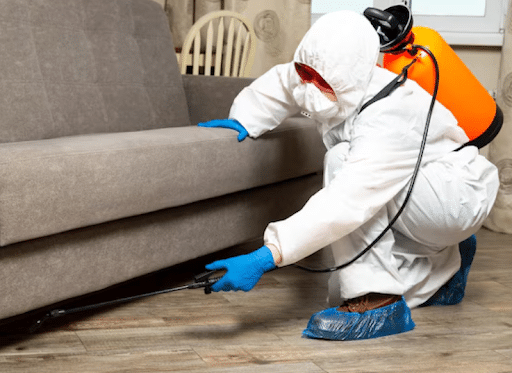
It depends on the infestation and treatment method.
Heat has one major advantage: it doesn’t depend on a chemical reaching every individual insect.
Bed bugs hiding deep inside certain objects or protected spaces may be difficult to reach with surface applications.
Heat, when properly distributed, can treat a larger volume of the room simultaneously.
That doesn’t mean chemical treatment is useless. Depending on the situation, professionals may use targeted treatments alongside other control measures.
The right approach depends on:
- Infestation size
- Number of affected rooms
- Property layout
- Hiding locations
- Previous treatment attempts
- Risk of reintroduction
- Whether neighboring units are affected
A good pest professional should inspect first rather than automatically recommending the same treatment for every home.
Can Bed Bugs Hide From Heat?
They can hide from poorly distributed heat.
That’s different.
Bed bugs are excellent at finding cracks, furniture joints, mattress seams, and other protected spaces. If those areas never reach the necessary temperature, insects inside them may survive.
This is one reason professional equipment and monitoring matter.
A professional treatment isn’t simply:
“Make the room hot.”
It’s closer to:
“Make sure the treatment area reaches the required conditions where the bed bugs are actually hiding.”
More Services
Best Bed Bug Control in Allen, TX
Best Bed Bug Control in Lewisville, TX
Bed Bug Removal Specialists in Dallas, TX
Bed Bug Removal Services Denton, TX
What About Mattresses and Furniture?
Homeowners often worry that heat will destroy their furniture.
Not necessarily.
Many household items can remain inside during professional heat treatment, but heat-sensitive materials may require special handling or removal.
The EPA specifically advises professionals to identify and properly handle heat-sensitive items because some materials can be damaged by high temperatures.
That means homeowners shouldn’t assume that every object is automatically safe.
Before treatment, ask your pest professional about:
- Electronics
- Candles
- Aerosol containers
- Medications
- Certain plastics
- Plants
- Heat-sensitive materials
Preparation instructions should be followed carefully.
Can People or Pets Stay Inside During Heat Treatment?
No.
People and pets should not remain inside a residence while professional whole-room heat treatment is being performed.
The temperatures used to kill bed bugs are intentionally far beyond normal indoor temperatures.
A published medical case report documented a fatality associated with residential bed bug heat treatment, reinforcing why occupants must leave during treatment and follow professional re-entry instructions.
This is not something to experiment with using household heaters.
The EPA specifically warns against attempting DIY heating with space heaters, fireplaces, or similar methods because these approaches can be dangerous and may cause fires without providing reliable bed bug control.
What About Pets?
Pets should also be removed from the property before treatment.
That includes:
- Dogs
- Cats
- Birds
- Rabbits
- Reptiles
- Small mammals
- Other household animals
Do not assume that because heat treatment doesn’t require pesticide application, your pet can safely stay inside.
The treatment environment itself becomes dangerously hot.
Your pest control provider should tell you when it is safe for people and animals to return.
What Should You Do Before Heat Treatment?
Preparation can make a major difference.
1. Follow the Professional Preparation Checklist
Don’t improvise.
Your treatment company should provide specific preparation instructions based on the property and equipment being used.
2. Remove People and Pets
Everyone should leave before treatment begins.
Don’t leave pets in another room thinking they’ll be protected from the heat.
3. Reduce Excessive Clutter
Clutter can interfere with heat circulation and make treatment more difficult.
Keep treatment areas accessible.
4. Identify Heat-Sensitive Items
Ask your technician which items need to be removed or handled differently.
5. Don’t Move Infested Furniture Around
Moving an infested mattress, sofa, or piece of furniture to another room can spread bed bugs.
Let the technician determine how affected items should be handled.
What Happens After Heat Treatment?
Finishing the heat treatment doesn’t mean you should immediately forget about bed bugs.
The EPA points out that heat treatment has no residual effect, meaning it does not create a lasting chemical barrier against future introductions.
Bed bugs can return if they are brought back into the home through:
- Travel
- Used furniture
- Infested belongings
- Guests
- Neighboring units
That’s why follow-up inspections and prevention matter.
At Doffdon Bedbug Exterminator, professional treatment can include inspection, heat treatment when appropriate, targeted treatment options, and follow-up inspections based on the situation.
The Bottom Line: Can Bed Bugs Survive Heat Treatment?
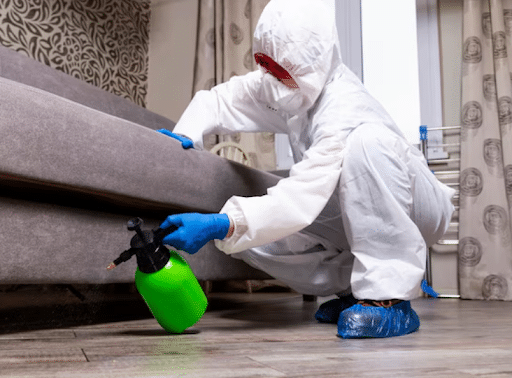
Yes—if the treatment is incomplete, poorly monitored, or doesn’t expose hiding areas to sufficient heat for enough time.
But science shows that properly controlled heat can be highly effective against bed bugs and their eggs.
The important takeaway isn’t simply that “heat kills bed bugs.”
It’s that professional heat treatment works because temperature, exposure time, circulation, and coverage are carefully managed.
If you’ve already tried sprays and are still waking up with bites, finding blood spots on your sheets, or discovering bed bugs around your mattress and furniture, don’t keep guessing.
A professional inspection can help determine how extensive the infestation is and whether heat treatment makes sense for your property.
Our locations
Best Bed Bug Control in Fort Worth, TX
Pest Control Company Princeton, TX
Best Bed Bug Control in Murphy, TX
Frequently Asked Questions
Q-1. Can bed bugs survive professional heat treatment?
Properly performed heat treatment can kill bed bugs at all life stages, including eggs.
- Can a few bugs survive?
They may survive if an area doesn’t reach the required temperature or exposure time.- Why are hidden areas important?
Bed bugs can shelter inside furniture, cracks, mattresses, and other protected locations.
- Why are hidden areas important?
- Does higher temperature always mean better treatment?
Not necessarily. Professional treatment depends on controlled temperature, exposure time, and coverage.
Q-2. What temperature kills bed bugs?
Research has demonstrated that bed bug mortality increases as temperature and exposure time increase. The EPA states that bed bugs die when their body temperature reaches approximately 45°C (113°F), while research has identified higher lethal thresholds depending on life stage and exposure conditions.
- Do eggs require different conditions?
Yes. Eggs can tolerate some heat exposures longer than adults.- Why does exposure time matter?
A temperature reached briefly may not produce the same result as sustained exposure.
- Why does exposure time matter?
Q-3. Can bed bugs hide from heat?
Bed bugs can survive if they remain in areas that never reach lethal treatment conditions.
- Where do they hide?
Common locations include mattress seams, furniture, cracks, baseboards, and other protected spaces.- Can heat reach furniture?
Properly conducted professional treatment can reach many areas that are difficult to treat with surface applications.
- Can heat reach furniture?
Q-4. Can I stay home during a heat treatment?
No. Occupants should leave during professional whole-room heat treatment.
- Should pets leave too?
Yes. Pets should be removed before treatment begins.- When can everyone return?
Follow the pest professional’s specific re-entry instructions rather than relying on a generic timeframe.
- When can everyone return?
Q-5. Can I use space heaters to kill bed bugs?
No. DIY heating with household heaters is unsafe and unreliable.
- Why doesn’t turning up the thermostat work?
It cannot reliably create the temperature conditions needed throughout the treatment area.- Can DIY heat cause a fire?
Yes. The EPA warns against dangerous DIY heating approaches such as space heaters and fireplaces.
- Can DIY heat cause a fire?
Q-6. Can bed bugs come back after heat treatment?
Yes. A successful treatment does not prevent a new infestation from being introduced later.
- How can they return?
They can be brought in through luggage, used furniture, belongings, visitors, or neighboring infested units.- How can homeowners reduce the risk?
Inspect secondhand furniture, check luggage after travel, and arrange follow-up inspections when recommended.
- How can homeowners reduce the risk?
Q-7. Does heat treatment kill bed bug eggs?
Yes, when the eggs are exposed to the required lethal temperature and duration.
- Are eggs harder to kill?
Some research shows that eggs can tolerate certain lower-temperature exposures longer than adult bed bugs.- What does that mean for treatment?
The entire treatment area must be properly heated rather than relying on a brief temperature spike.
- What does that mean for treatment?
Q-8. Is professional heat treatment better than DIY sprays?
For widespread infestations, professional heat treatment can offer an important advantage because properly controlled heat can treat a large area rather than relying only on direct contact with visible insects.
- Do sprays ever have a role?
Yes. Targeted professional treatments may be appropriate depending on the infestation.- Why shouldn’t homeowners keep spraying randomly?
Repeated or improper pesticide use can be ineffective and may create additional risks. The EPA recommends careful, label-directed pesticide use and professional help when needed.
- Why shouldn’t homeowners keep spraying randomly?
Best Bed Bug Control in Aubrey, TX
Best Bed Bug Control in Argyle, TX
Best Pest Control New Hope, TX
Best Pest Control Josephine, TX
Pest Control Near Me St. Paul, TX
Bed Bug Exterminator Blue Ridge, TX
Bed Bug Treatment Blue Ridge, TX
Pest Control Company Blue Ridge, TX
Need Help With Bed Bugs?
If you suspect an infestation, don’t wait until the problem spreads from one bedroom into the rest of the home.
Doffdon Bedbug Exterminator provides professional bed bug inspections and treatment options, including heat treatment when appropriate.
Call: (469) 499-4495
Email: donsonbrooks@gmail.com | don@doffdon.com
Business Hours:
Mon–Wed: 7:30 AM–11:00 PM
Thu: 7:30 AM–6:00 PM
Fri–Sat: 7:30 AM–11:00 PM
Sun: 2:30 PM–11:00 PM
If you’re finding bed bugs, don’t gamble on whether the last one is hiding somewhere you can’t see. Get the infestation inspected and find out what treatment makes sense for your home.